Back To Home Page

Practicing Car Loan Repayments
MAE Tabung for Car is a goal-based savings feature in the MAE app by Maybank. It lets users simulate car loan repayments by saving a fixed amount monthly, helping them build financial discipline and prepare for actual car ownership—without committing to a real loan.
Problem
Many young Malaysians struggle to understand and evaluate their financial readiness for car ownership. Without the right tools, guidance, or financial insights, they often face uncertainty and anxiety when considering long-term loan commitments and future financial responsibilities. This lack of confidence and clarity can lead to poor financial decisions or delayed car ownership.
Role
I led the design for this project with a cross-functional squad, covering everything from user research to the end-to-end UX/UI process. Given the broader impact, I also collaborated closely with two other squads to ensure a seamless onboarding experience for new users.
Goals
The goal was to design an experience that helps users better understand their financial readiness for car ownership by encouraging consistent saving habits, fostering financial discipline, and giving them greater confidence before committing to an actual car loan.
Impact
Just six months after launching, this project led to 10,500 Tabung accounts being opened for practicing car loan repayments, helping users build readiness for loan commitments, generating £1.7 million in deposits, and converting 2,500 users (23.8%) into actual car loan applicants.
Timeline
2 Weeks - Discovery Research
2 Weeks - Solutioning & Testing
1 Weeks - Finalize design
1 Weeks - Present to Stakeholders
A deep dive into our persona focus
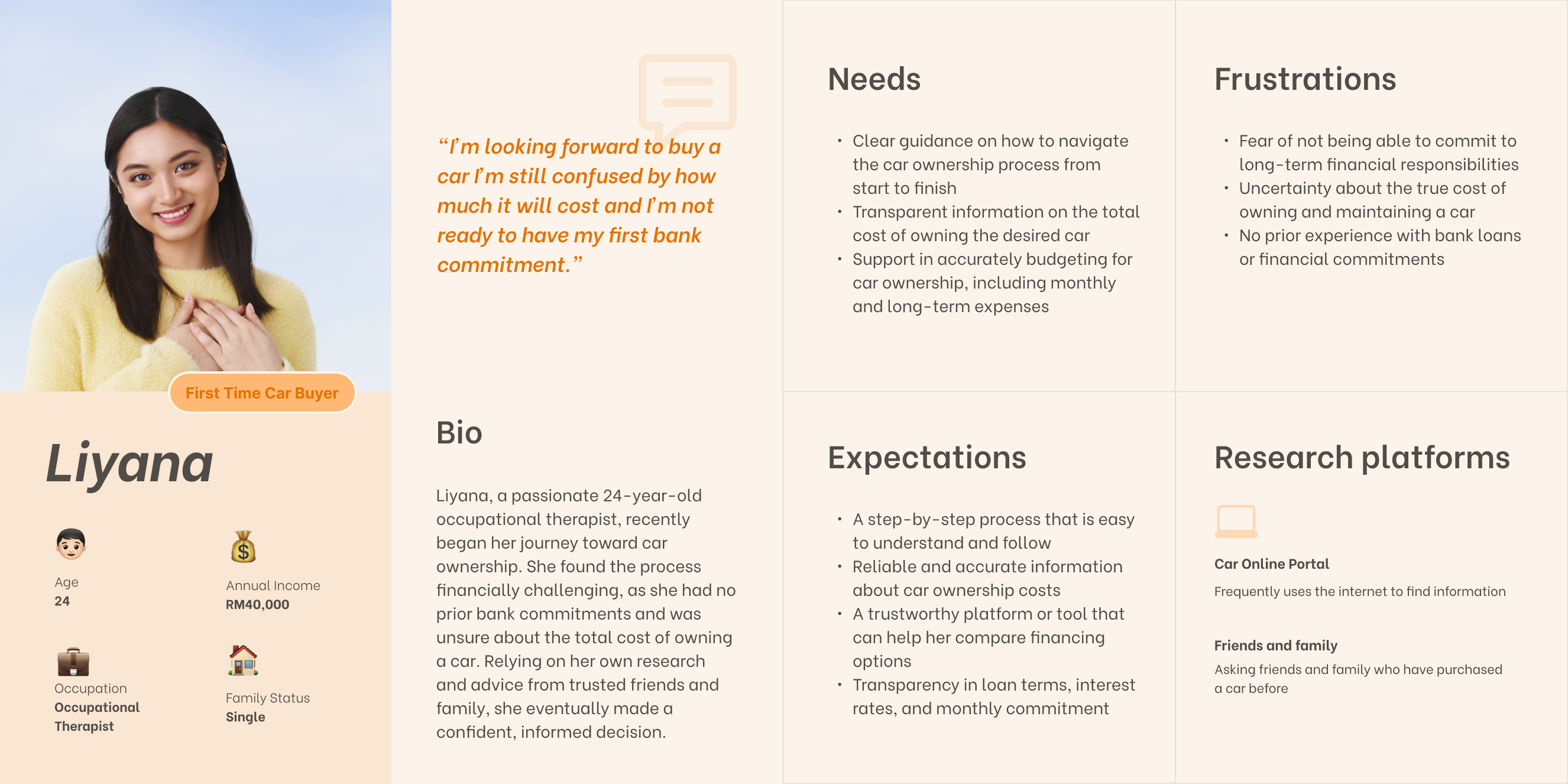
Through quantitative research with 20 participants, we found that many younger users—specifically those born after year 2000—felt uncertain and anxious about car ownership.
User research results & insights
Based on quantitative research, we found that the younger generation tends to feel more anxious and fearful about car ownership. This is largely because they are just entering the workforce and are not yet accustomed to managing financial commitments.
Supporting this, internal data from the Auto Finance team shows a year-on-year decline in car loan applications from individuals aged 25 and below. This reflects a broader trend in the market, where younger consumers are delaying major financial decisions due to rising living costs, student debt, and preference for flexible mobility options like e-hailing and car-sharing services.
Idea & Solutioning
Practice Car Repayment
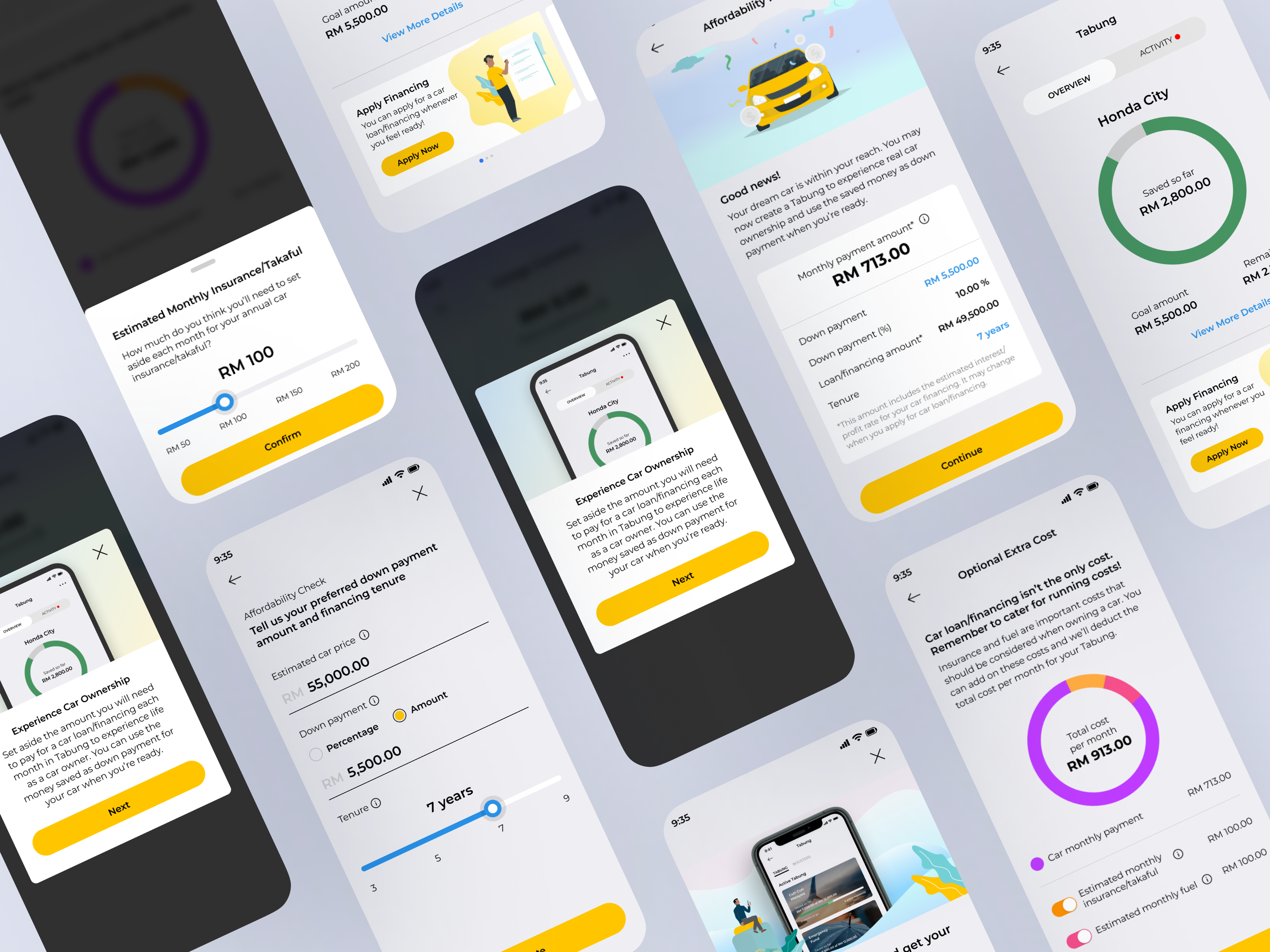
From the insights and journey mapping gathered during the research and empathy stages, we developed a solution that allows our user persona to simulate monthly car loan repayments based on their preferred car price.
This feature helps them understand what they can realistically afford each month—similar to actual car financing calculations. Over time, this also encourages them to start saving towards the required down payment.
Usability tests and iterations
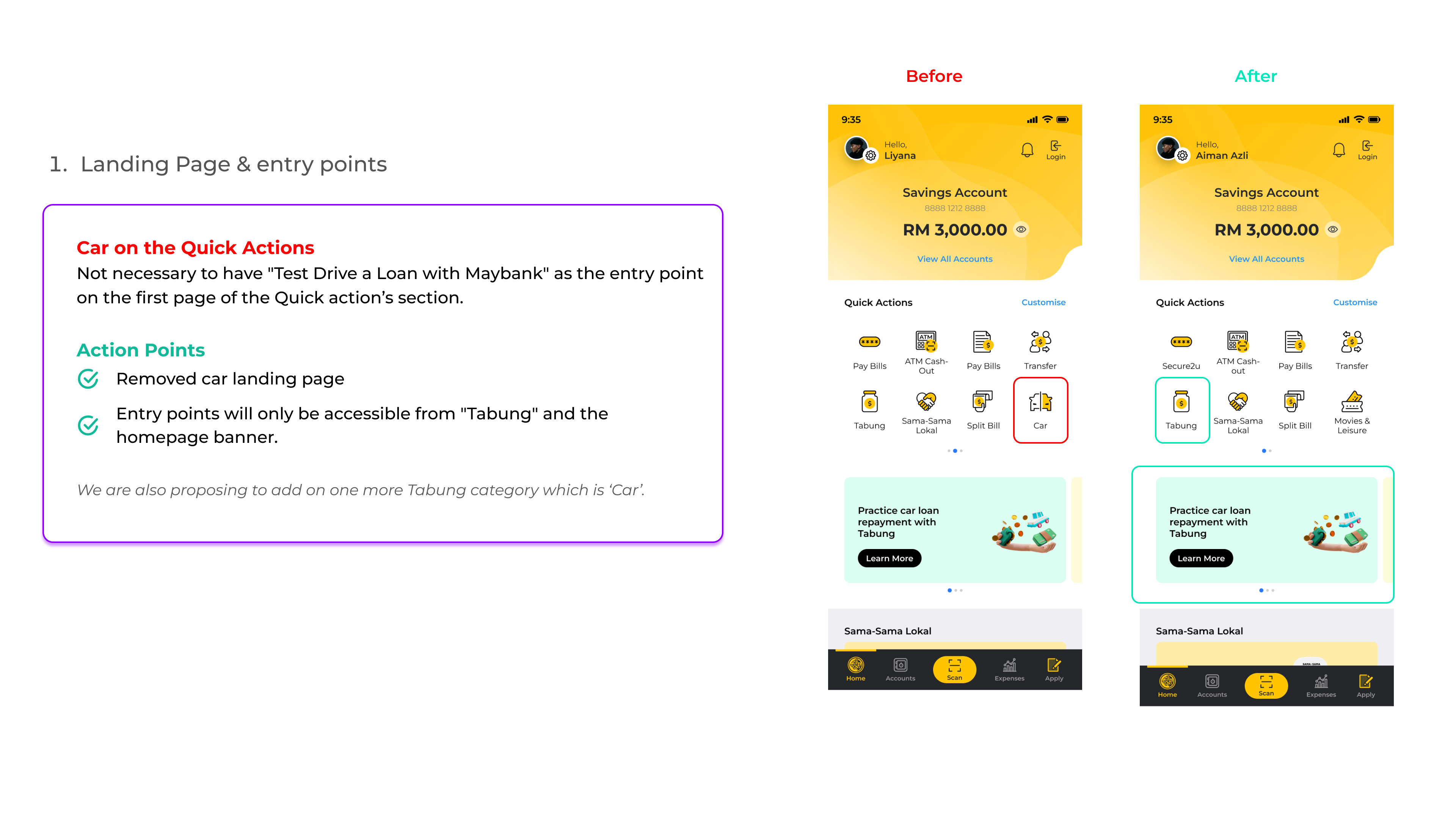
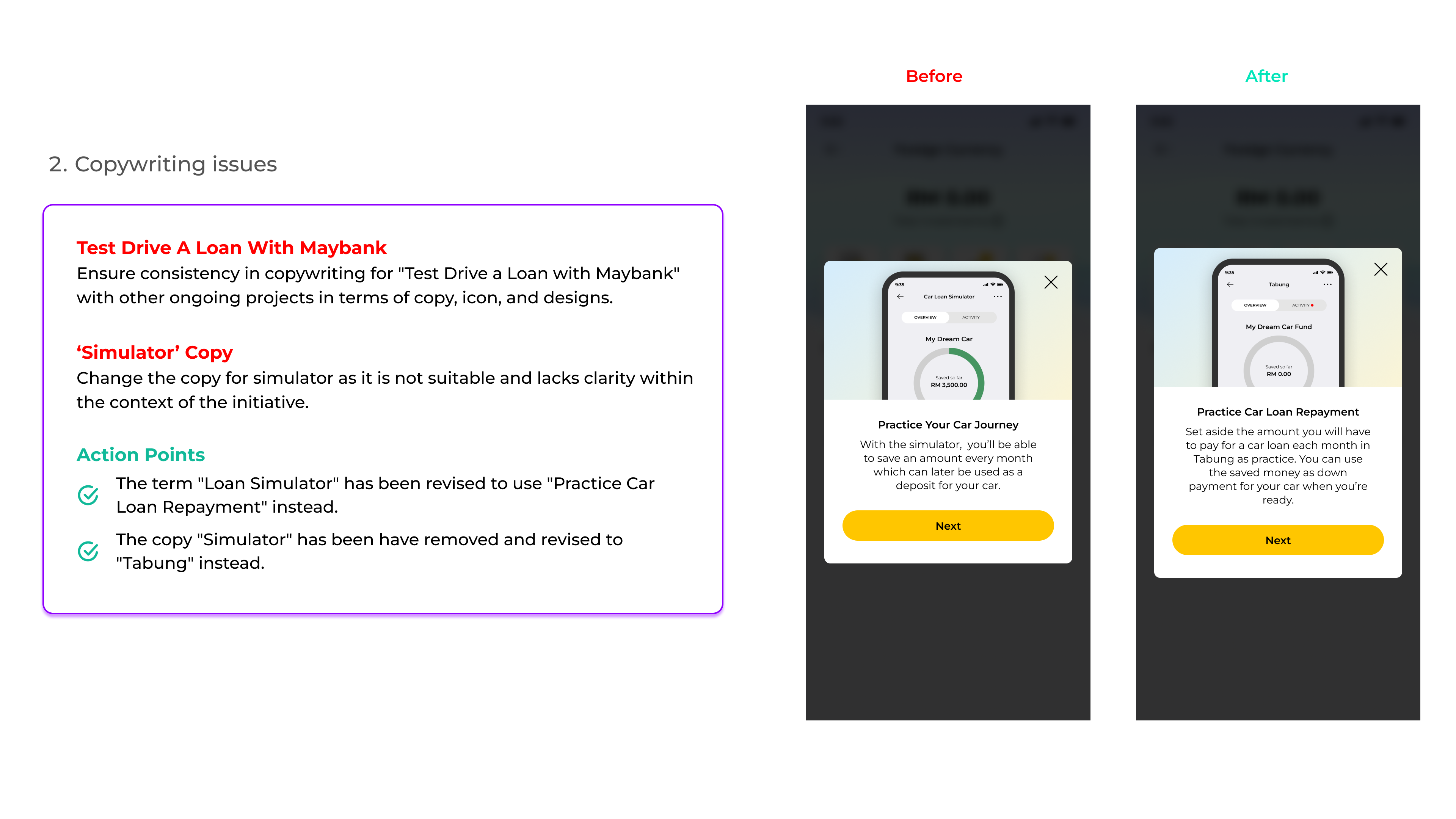
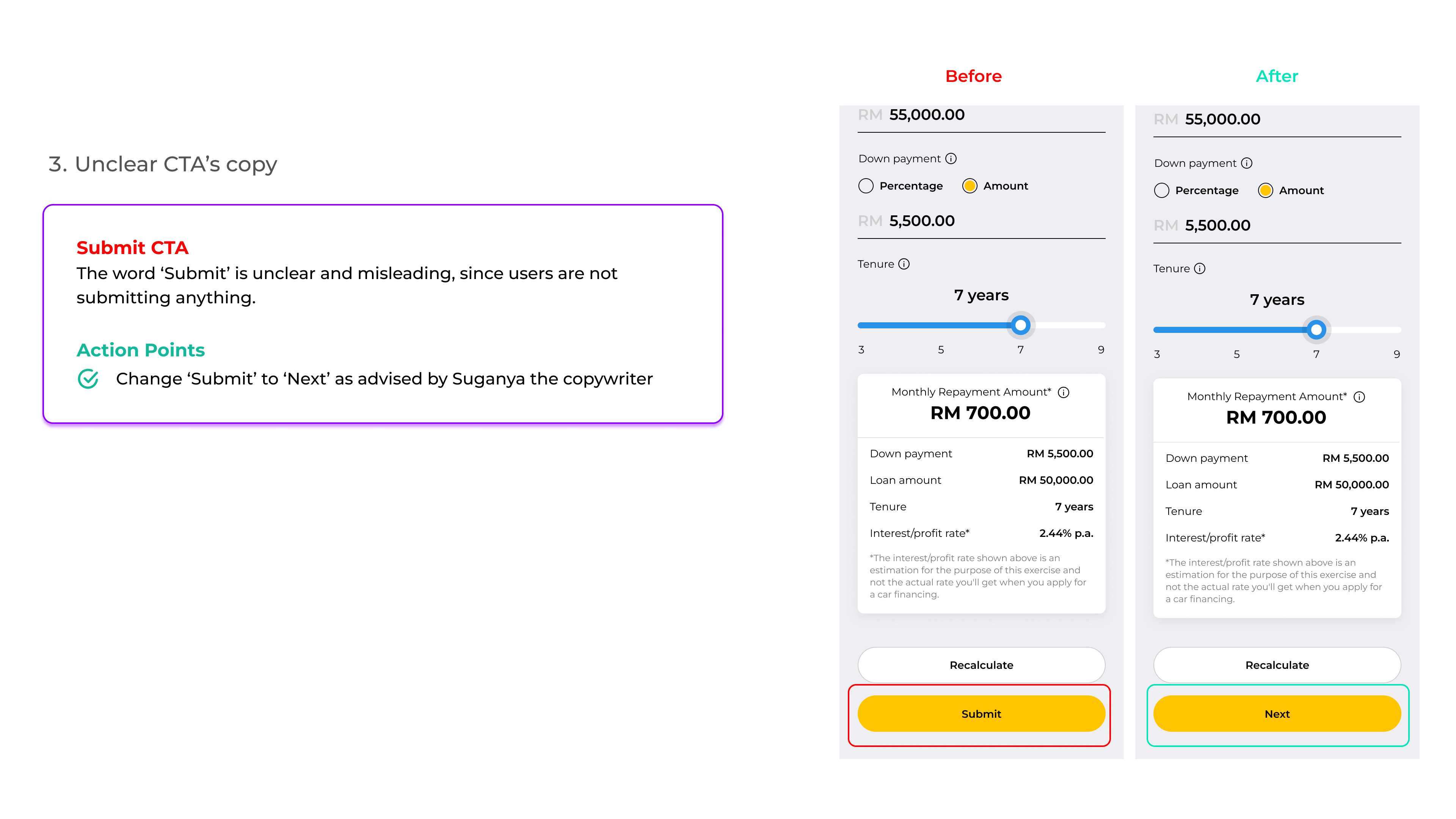
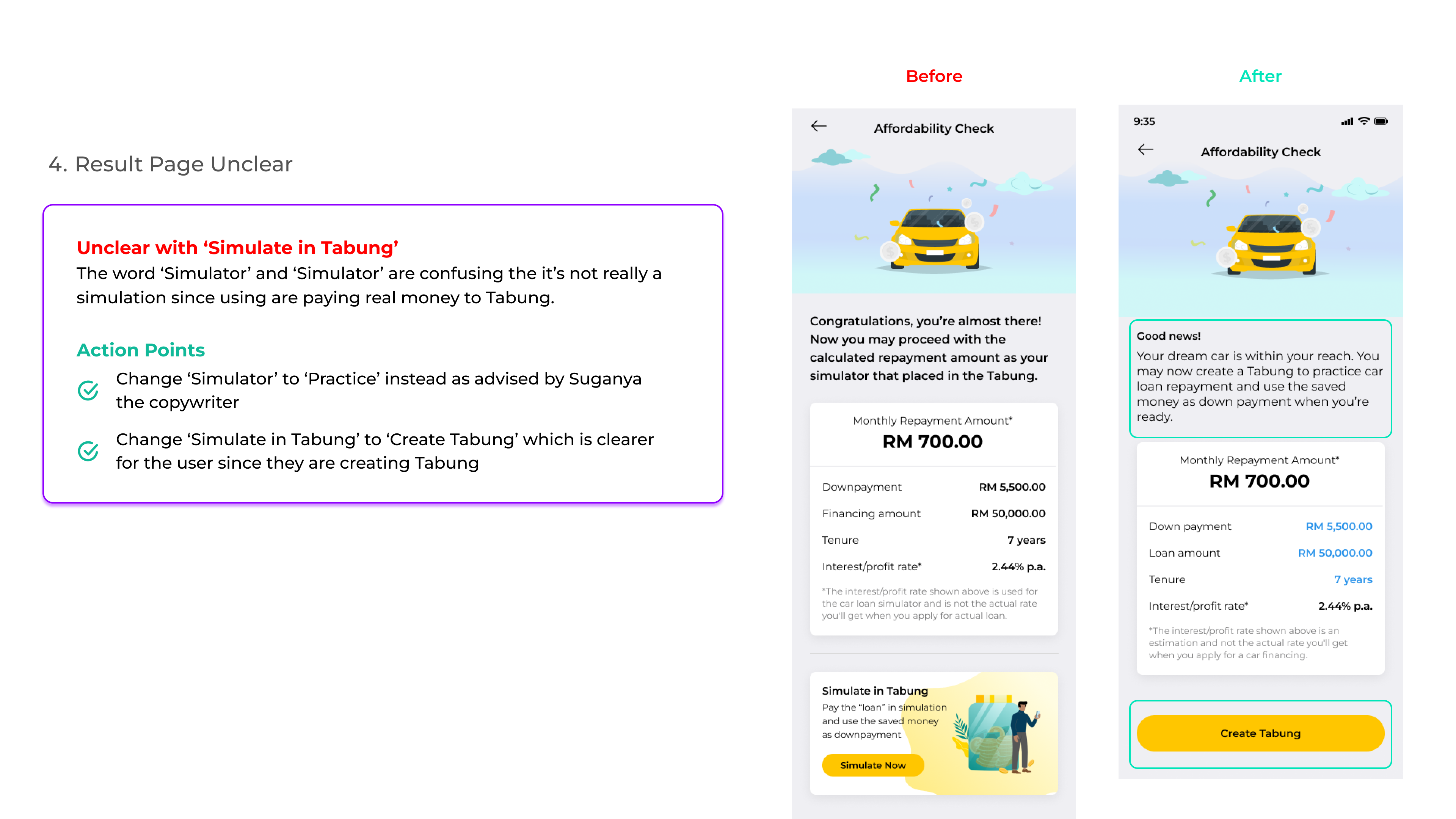
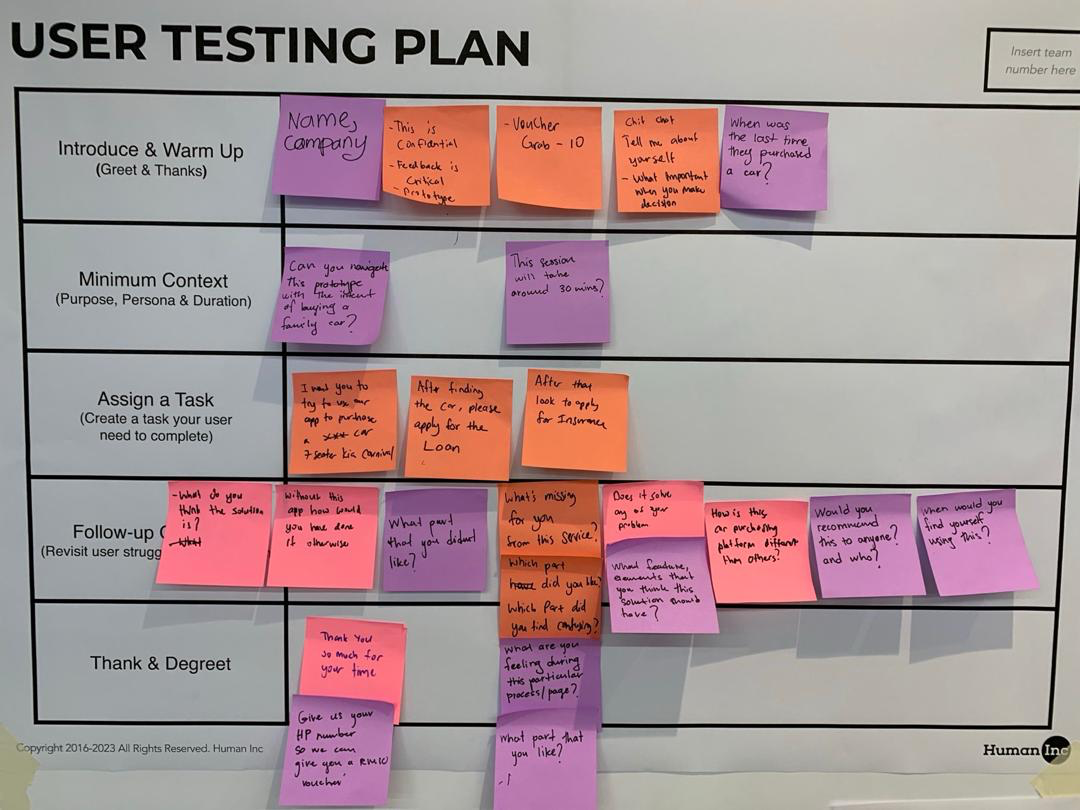
We conducted usability testing with 10 participants—both current car owners and those who have not yet owned a car. The goal was to assess whether users understood the solution and to gather their feedback on the concept.
Final Design
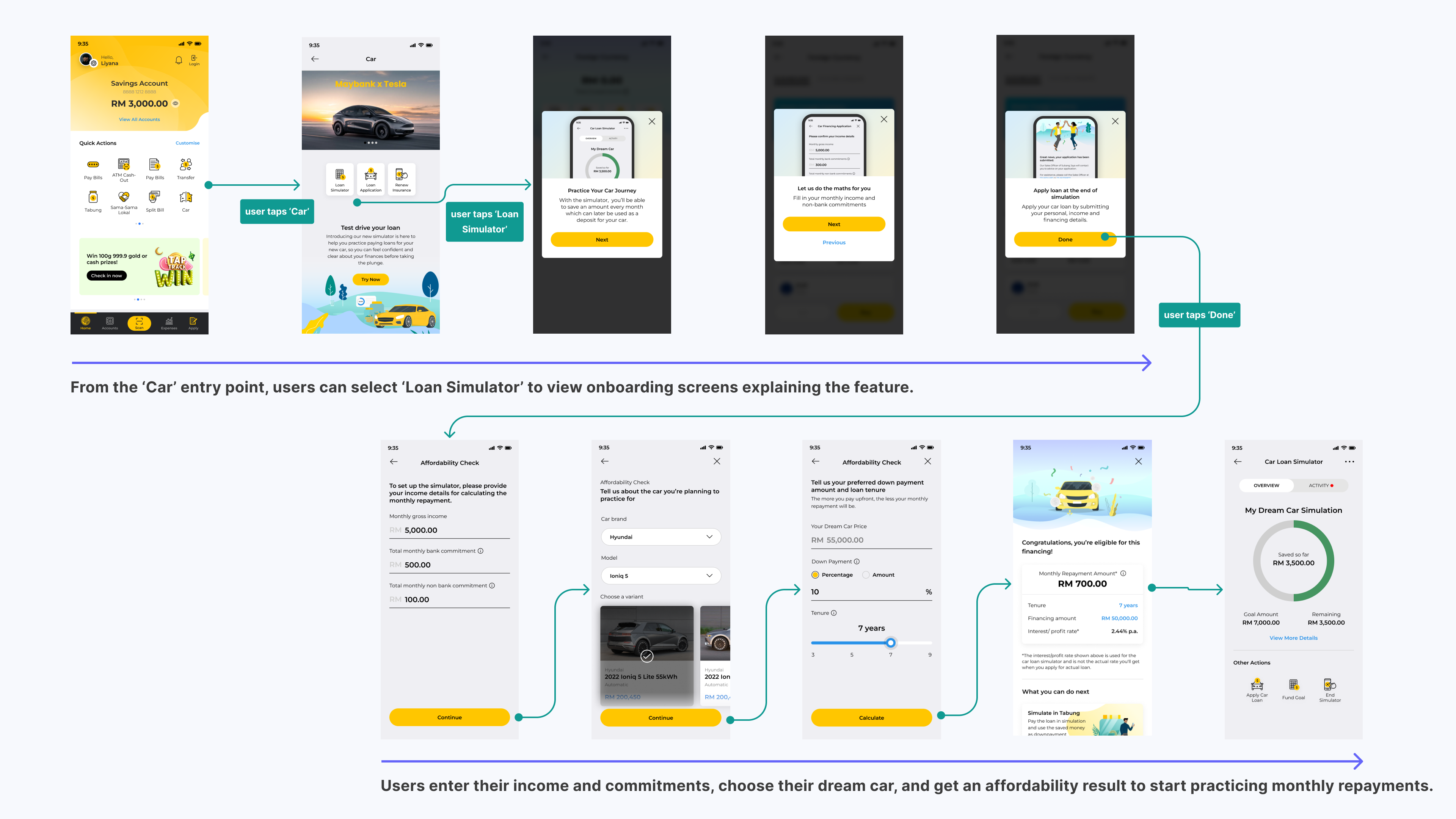
Based on the feedback we received, I refined the design and user flow before presenting it to top management. This became the final end-to-end flow of the solution.
Checkout how the end to end flow works :
Unsure and afraid of car ownership
From this participants, majority are born after year 2000.
Anxious about monthly commitment
The majority were from the younger generation, and many had not yet taken on any monthly financial commitments
Having hard time to pay downpayment
The average car price in Malaysia ranges from RM50,000 to RM70,000, with a required down payment of 10%—which can be a significant financial burden for many.
Overview
About the company
Maybank, the leading bank in Malaysia with over 22 million customers worldwide and more than £170 billion in assets, delivers retail, corporate, and Islamic banking, insurance, and digital financial services while driving innovation through its Maybank2u platform and MAE app to humanise financial services across Southeast Asia.
What’s my process?
Design Workshop
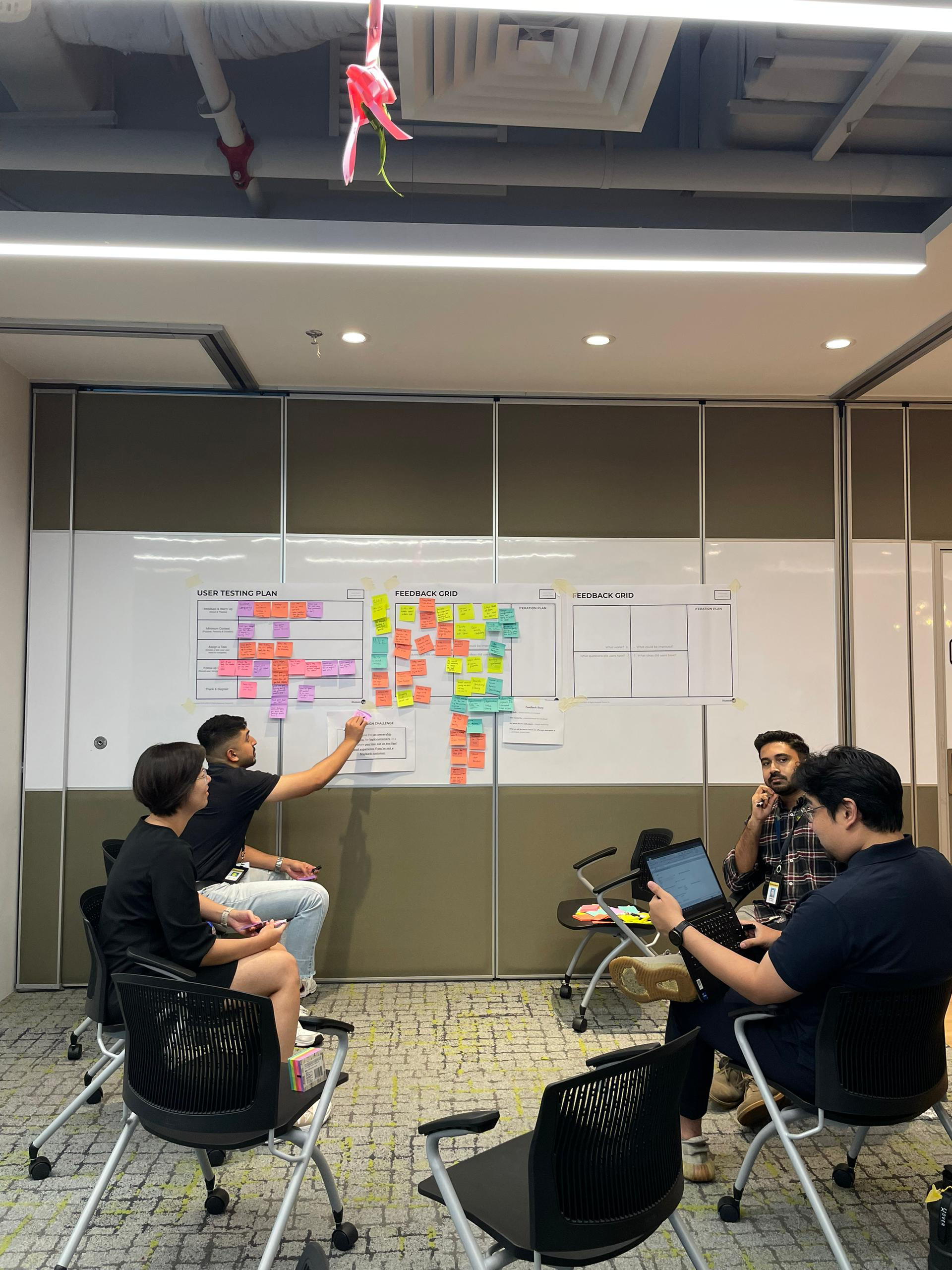
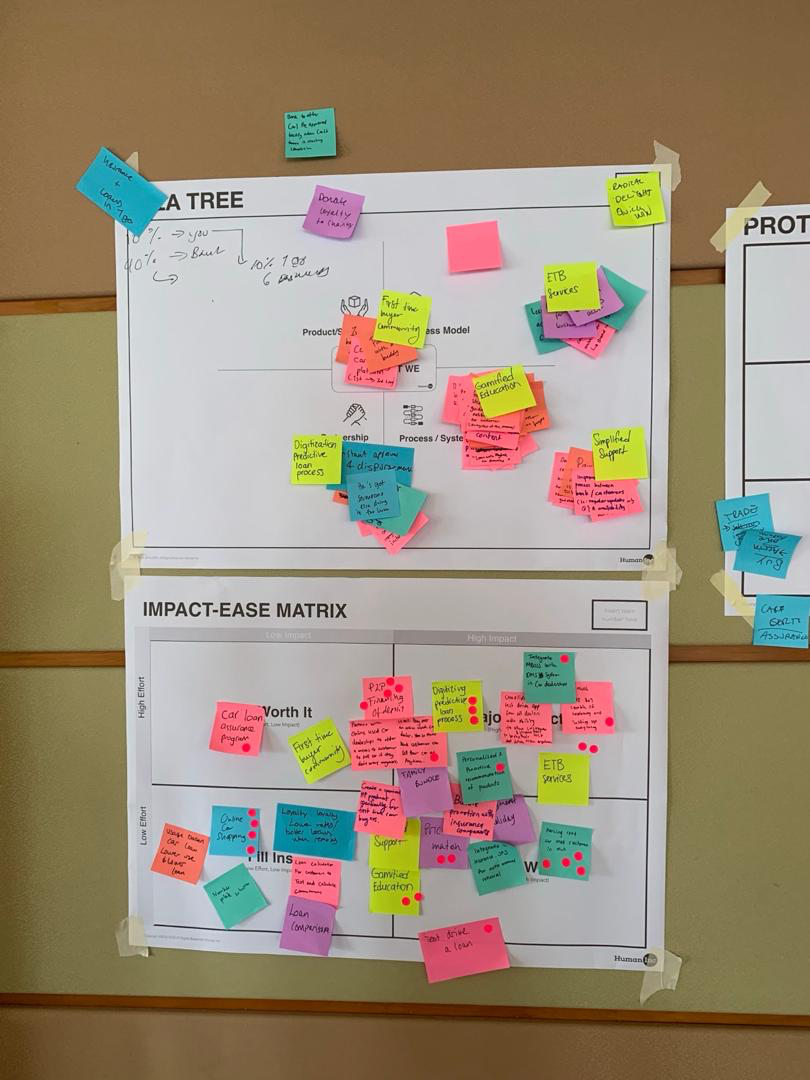
Before the project began, we conducted in a design workshop with our business team and stakeholders to better understand the challenges and trends in the car loan space in Malaysia.
The workshop followed the full Design Thinking process over three weeks—empathising with users, defining problems, ideating solutions, prototyping, and testing. It helped align everyone on user needs and ensured that all parties—from business to stakeholders—understood how user-centred design could help drive better outcomes.
Define and Ideate
We used the Business Model Canvas and Financial Modelling board to validate the viability of the idea from both business and customer perspectives.
Qualitative &
Quantitative Research
During the workshop, we conducted user surveys and interviews to understand how people prepare to buy a car, as well as the experiences of those who have already purchased one—focusing on their journey before and after the purchase.
Mind Reader (Emphaty Map)
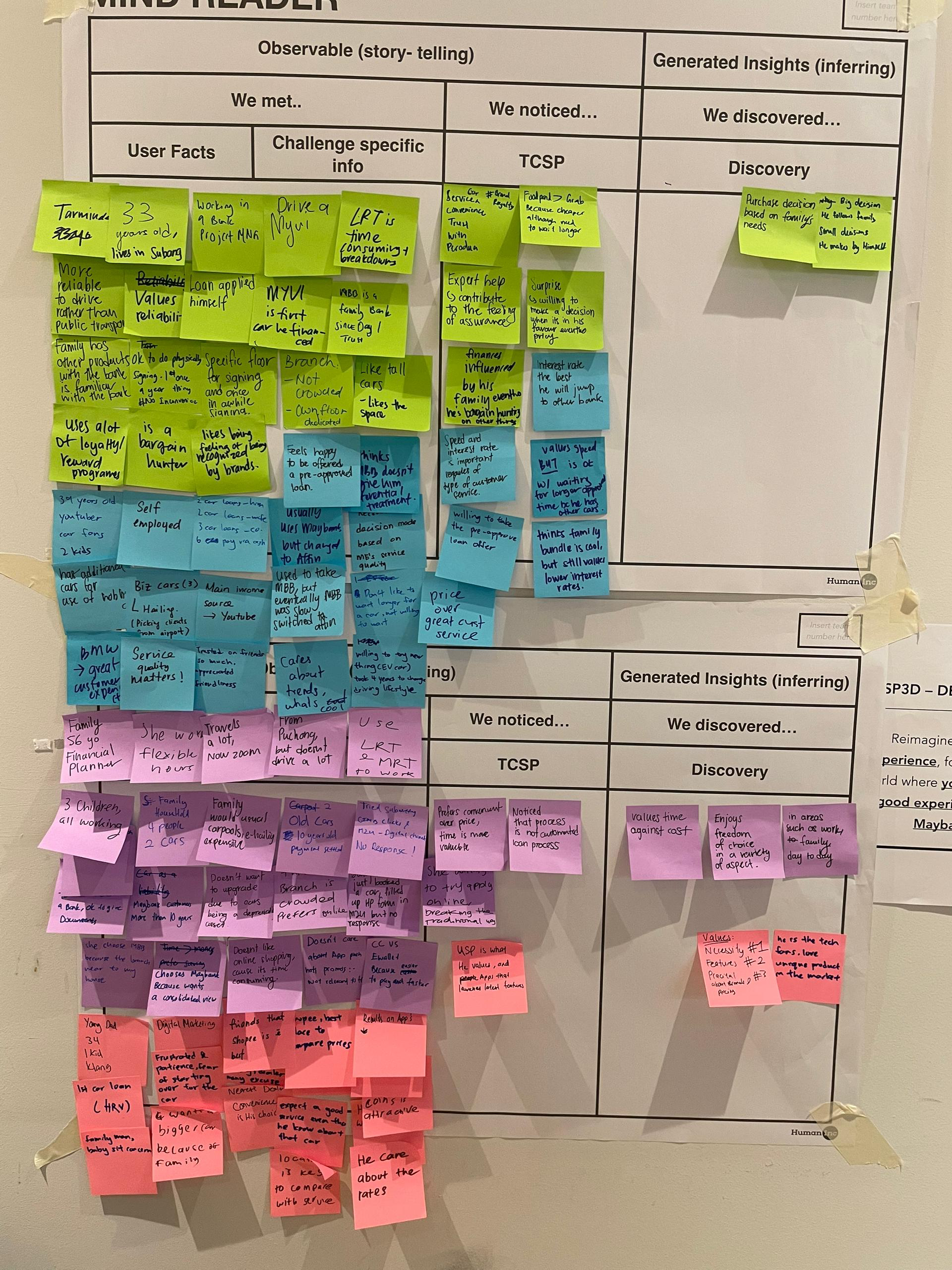
To synthesise the user research, we identified patterns in user behavior, needs, and pain points, and distilled key insights to guide ideation and inform our design direction.
Ideating Solutions & Testing
Based on our insights, we generated around 8 potential solutions. Using the impact–effort matrix, we narrowed them down to two key concepts: a tool for practicing car loan repayments and a guided tutorial on what to expect when owning a car in Malaysia.
Refine & Present
Based on insights from usability testing, I refined the final design to be presented to top management for review and approval.
10,500 + users started practicing
Just six months after launching the feature, over 10,500 Tabung accounts have been opened, with users beginning to practice car repayment.
More than £1.7 million was placed in the Tabung
Since it simulates car ownership repayments, the Tabung feature has led to over £1.7 million being deposited into the bank.
More than 2500 car loan conversions
After users completed the practice phase, we tracked over 2500 loan conversions with the bank through applications submitted via the dashboard.
Outcomes & Metrics
After few months then this product was publiclily launched where user will can access this feature on their MAE App. The result were positive and impact the user where there are real car loan conversion from the Practice Car Repayment.
Back To Home Page
Practicing Car Loan Repayments
MAE Tabung for Car is a goal-based savings feature in the MAE app by Maybank. It lets users simulate car loan repayments by saving a fixed amount monthly, helping them build financial discipline and prepare for actual car ownership—without committing to a real loan.
Problem
Many young Malaysians struggle to understand and evaluate their financial readiness for car ownership. Without the right tools, guidance, or financial insights, they often face uncertainty and anxiety when considering long-term loan commitments and future financial responsibilities. This lack of confidence and clarity can lead to poor financial decisions or delayed car ownership.
Role
I led the design for this project with a cross-functional squad, covering everything from user research to the end-to-end UX/UI process. Given the broader impact, I also collaborated closely with two other squads to ensure a seamless onboarding experience for new users.
Goals
The goal was to design an experience that helps users better understand their financial readiness for car ownership by encouraging consistent saving habits, fostering financial discipline, and giving them greater confidence before committing to an actual car loan.
Impact
Just six months after launching, this project led to 10,500 Tabung accounts being opened for practicing car loan repayments, helping users build readiness for loan commitments, generating £1.7 million in deposits, and converting 2,500 users (23.8%) into actual car loan applicants.
Timeline
2 Weeks - Discovery Research
2 Weeks - Solutioning & Testing
1 Weeks - Finalize design
1 Weeks - Present to Stakeholders
A deep dive into our persona focus
Through quantitative research with 20 participants, we found that many younger users—specifically those born after year 2000—felt uncertain and anxious about car ownership.
User research results & insights
Based on quantitative research, we found that the younger generation tends to feel more anxious and fearful about car ownership. This is largely because they are just entering the workforce and are not yet accustomed to managing financial commitments.
Supporting this, internal data from the Auto Finance team shows a year-on-year decline in car loan applications from individuals aged 25 and below. This reflects a broader trend in the market, where younger consumers are delaying major financial decisions due to rising living costs, student debt, and preference for flexible mobility options like e-hailing and car-sharing services.
Unsure and afraid of car ownership
From this participants, majority are born after year 2000.
Anxious about monthly commitment
The majority were from the younger generation, and many had not yet taken on any monthly financial commitments
Having hard time to pay downpayment
The average car price in Malaysia ranges from RM50,000 to RM70,000, with a required down payment of 10%—which can be a significant financial burden for many.
Idea & Solutioning
Practice Car Repayment
From the insights and journey mapping gathered during the research and empathy stages, we developed a solution that allows our user persona to simulate monthly car loan repayments based on their preferred car price.
This feature helps them understand what they can realistically afford each month—similar to actual car financing calculations. Over time, this also encourages them to start saving towards the required down payment.
Usability tests and iterations
We conducted usability testing with 10 participants—both current car owners and those who have not yet owned a car. The goal was to assess whether users understood the solution and to gather their feedback on the concept.
Final Design
Based on the feedback we received, I refined the design and user flow before presenting it to top management. This became the final end-to-end flow of the solution.
Checkout how the end to end flow works :
10,500 + users started practicing
Just six months after launching the feature, over 4,000 Tabung accounts have been opened, with users beginning to practice car repayment.
More than £1.7 million was placed in the Tabung
Since it simulates car ownership repayments, the Tabung feature has led to over £1.7 million being deposited into the bank.
More than 2500 car loan conversions
After users completed the practice phase, we tracked over 2500 loan conversions with the bank through applications submitted via the dashboard.
Outcomes & Metrics
After few months then this product was publiclily launched where user will can access this feature on their MAE App. The result were positive and impact the user where there are real car loan conversion from the Practice Car Repayment.
What’s my process?
Design Workshop
Before the project began, i helped facililitate a design workshop with our business team and stakeholders to better understand the challenges and trends in the car loan space in Malaysia. The workshop followed the full Design Thinking process over three weeks—empathising with users, defining problems, ideating solutions, prototyping, and testing. It helped align everyone on user needs and ensured that all parties—from business to stakeholders—understood how user-centred design could help drive better outcomes.
Define and Ideate
We used the Business Model Canvas and Financial Modelling board to validate the viability of the idea from both business and customer perspectives.
Qualitative & Quantitative Research
During the workshop, we conducted user surveys and interviews to understand how people prepare to buy a car, as well as the experiences of those who have already purchased one—focusing on their journey before and after the purchase.
Mind Reader (Emphaty Map)
To synthesise the user research, identified patterns in user behavior, needs, and pain points, and distilled key insights to guide ideation and inform our design direction.
Ideating Solutions & Testing
Based on our insights, we generated around 8 potential solutions. Using the impact–effort matrix, we narrowed them down to two key concepts: a tool for practicing car loan repayments and a guided tutorial on what to expect when owning a car in Malaysia.
Refine & Present
Based on insights from usability testing, I refined the final design to be presented to top management for review and approval.
Overview
About the company
Maybank, the leading bank in Malaysia with over 22 million customers worldwide and more than £170 billion in assets, delivers retail, corporate, and Islamic banking, insurance, and digital financial services while driving innovation through its Maybank2u platform and MAE app to humanise financial services across Southeast Asia.
Back To Home Page
Practicing Car Loan Repayments
MAE Tabung for Car is a goal-based savings feature in the MAE app by Maybank. It lets users simulate car loan repayments by saving a fixed amount monthly, helping them build financial discipline and prepare for actual car ownership—without committing to a real loan.
Problem
Many young Malaysians struggle to understand and evaluate their financial readiness for car ownership. Without the right tools, guidance, or financial insights, they often face uncertainty and anxiety when considering long-term loan commitments and future financial responsibilities. This lack of confidence and clarity can lead to poor financial decisions or delayed car ownership.
Role
I led the design for this project with a cross-functional squad, covering everything from user research to the end-to-end UX/UI process. Given the broader impact, I also collaborated closely with two other squads to ensure a seamless onboarding experience for new users.
Goals
The goal was to design an experience that helps users better understand their financial readiness for car ownership by encouraging consistent saving habits, fostering financial discipline, and giving them greater confidence before committing to an actual car loan.
Impact
Just six months after launching, this project led to 10,500 Tabung accounts being opened for practicing car loan repayments, helping users build readiness for loan commitments, generating £1.7 million in deposits, and converting 2,500 users (23.8%) into actual car loan applicants.
Timeline
2 Weeks - Discovery Research
2 Weeks - Solutioning & Testing
1 Weeks - Finalize design
1 Weeks - Present to Stakeholders
A deep dive into
our persona focus
Through quantitative research with 20 participants, we found that many younger users, specifically those born after year 2000, felt uncertain and anxious about car ownership.
User research
results & insights
Based on quantitative research, we found that the younger generation tends to feel more anxious and fearful about car ownership. This is largely because they are just entering the workforce and are not yet accustomed to managing financial commitments.
Supporting this, internal data from the Auto Finance team shows a year-on-year decline in car loan applications from individuals aged 25 and below. This reflects a broader trend in the market, where younger consumers are delaying major financial decisions due to rising living costs, student debt, and preference for flexible mobility options like e-hailing and car-sharing services.
Unsure and afraid of car ownership
From this participants, majority are born after year 2000.
Anxious about monthly commitment
The majority were from the younger generation, and many had not yet taken on any monthly financial commitments
Having hard time to pay downpayment
The average car price in Malaysia ranges from RM50,000 to RM70,000, with a required down payment of 10%—which can be a significant financial burden for many.
Idea & Solutionning
Practice Car Repayment
From the insights and journey mapping gathered during the research and empathy stages, we developed a solution that allows our user persona to simulate monthly car loan repayments based on their preferred car price.
This feature helps them understand what they can realistically afford each month—similar to actual car financing calculations. Over time, this also encourages them to start saving towards the required down payment.
Usability tests
and iterations
Conducted usability testing with 10 participants, both current car owners and those who have not yet owned a car. The goal was to assess whether users understood the solution and to gather their feedback on the concept.
Final Design
Based on the feedback we received, I refined the design and user flow before presenting it to top management. This became the final end-to-end flow of the solution.
Checkout how the end to end flow works :
10,500 + users started practicing
Just six months after launching the feature, over 4,000 Tabung accounts have been opened, with users beginning to practice car repayment.
More than £1.7 million was placed in the Tabung
Since it simulates car ownership repayments, the Tabung feature has led to over £1.7 million being deposited into the bank.
More than 2500 car loan conversions
After users completed the practice phase, we tracked over 2500 loan conversions with the bank through applications submitted via the dashboard.
Outcomes & Metrics
After few months then this product was publiclily launched where user will can access this feature on their MAE App. The result were positive and impact the user where there are real car loan conversion from the Practice Car Repayment.
What’s my process?
Design Workshop
Before the project began, i helped facilitate a design workshop with our business team and stakeholders to better understand the challenges and trends in the car loan space in Malaysia. The workshop followed the full Design Thinking process over three weeks—empathising with users, defining problems, ideating solutions, prototyping, and testing. It helped align everyone on user needs and ensured that all parties—from business to stakeholders—understood how user-centred design could help drive better outcomes.
Define and Ideate
Used the Business Model Canvas and Financial Modelling board to validate the viability of the idea from both business and customer perspectives.
Qualitative & Quantitative Research
During the workshop, we conducted user surveys and interviews to understand how people prepare to buy a car, as well as the experiences of those who have already purchased one, focusing on their journey before and after the purchase.
Mind Reader (Emphaty Map)
To synthesise the user research, identified patterns in user behavior, needs, and pain points, and distilled key insights to guide ideation and inform our design direction.
Ideating Solutions & Testing
Based on the insights, generated around 8 potential solutions. Using the impact–effort matrix, we narrowed them down to two key concepts: a tool for practicing car loan repayments and a guided tutorial on what to expect when owning a car in Malaysia.
Refine & Present
Based on insights from usability testing, I refined the final design to be presented to top management for review and approval.
Overview
About the company
Maybank, the leading bank in Malaysia with over 22 million customers worldwide and more than £170 billion in assets, delivers retail, corporate, and Islamic banking, insurance, and digital financial services while driving innovation through its Maybank2u platform and MAE app to humanise financial services across Southeast Asia.